5X. Honoring Body Diversity in Early Childhood Settings
You are here
Children start developing their self-image at a young age. As children grow, adults can help them form positive views or perceptions of themselves, including about their physical characteristics and behaviors. Having a positive self-image contributes to a child’s overall sense of well-being.
In preschool programs, educators can foster children’s self-image through planned and spontaneous interactions. They can do so by both supporting body diversity and addressing anti-fatness. Body diversity encompasses the idea that bodies may all look different, but they all have value and deserve to be treated with dignity and respect. Anti-fatness (or anti-fat bias) relates to discrimination that can occur against individuals with larger bodies. Such messages and experiences can lead to lifelong consequences, including unhealthy or even disordered eating practices.
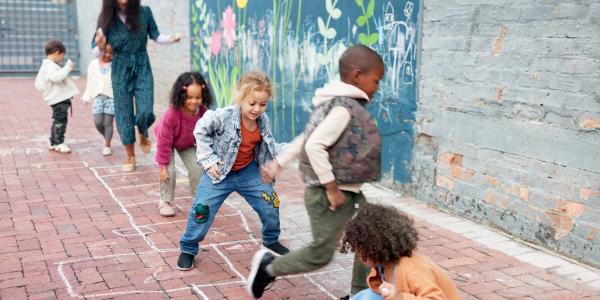
Photograph: © Getty Images. Copyright © 2026 by the National Association for the Education of Young Children. See permissions and reprints online at NAEYC.org/resources/permissions.
Anne Valauri, PhD, is an assistant professor in the Department of Elementary and Special Education and the program coordinator for the Birth–Kindergarten Teacher Education program at Georgia Southern University. Prior, she spent several years as a teacher/researcher at an early childhood center in the Midwest.