Member Spotlight: Alexis Rosales
You are here
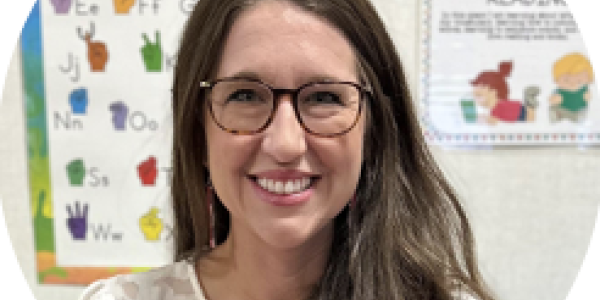
Since joining the Fort Bend Independent School District in Sugar Land, Texas, a decade ago, Alexis Rosales has served children in a variety of ways: As a classroom teacher, a pre-K instructional coach, and the program manager for Fort Bend’s special education programs. In her newest role as program manager for the district’s Student Support Instructional Services, Alexis helps children in special education, pre-K to 12th grade, access the assistive technology, vision, and adapted physical education services they may need.
Such inclusivity is a hallmark of her career. As program manager of the district’s former Special Education Specialized Programs, Alexis launched a districtwide initiative to increase the number of children with disabilities in general education classrooms. “When I joined the district, only 10 percent of prekindergartners with disabilities spent the day in an inclusive classroom,” she recalls. “I didn’t realize how far behind we were. What we thought was quality inclusion was 30 minutes here, 30 minutes there.”
Under her guidance, the percentage of 4-year-olds with disabilities in inclusive classrooms during the 2023–24 school year grew from 30 to 60 percent—much closer to the district’s goal of 70 percent. “We were very, very proud,” she says. “This was such a positive message to families.”
Following are excerpts from a conversation in which Alexis reflects on inclusiveness, children’s strengths, and the early childhood curricula.
You made incredible gains in increasing the number of children with disabilities in inclusive classrooms. To what do you attribute that success?
My year as a pre-K general education coach was the biggest impact maker. I could see where the gaps were. In the general education environment, children ended the year with much stronger literacy skills and approaches to learning. Special education was focusing too much on rote memorization.
When I returned to early childhood special education [ECSE], I aimed to change that way of thinking. I broke our continuum of services into two categories: Self-contained ECSE and ECSE inclusion. This helped illustrate that not all of the children in our ECSE space were served in a self-contained environment. We were able to provide our ECSE inclusion teachers with two paraeducators and other resources to support children with disabilities in general education classrooms.
This was such a group effort! During the 2022–23 school year, our ECSE transition teacher visited every classroom serving 3-year-olds, observed the children, and worked with teachers to analyze student data. They then worked with the Individualized Education Program committee to propose inclusive services for children’s prekindergarten year. Once the children began pre-K, special education teachers met with general education teachers and administration representatives every nine weeks to look at data gathered on each of the children in the early childhood education classrooms on our campuses. We asked, “How are they doing? Do we need to increase support? Do we need to decrease support? Do we need to back out and say, ‘This really isn’t working; let’s try a new approach,” or can we move them to an inclusive classroom and really let them fly? We also got family input—any changes to a child’s schedule includes them.
What was the impact of this like for families?
Families experience a range of emotions—fear and uncertainty about what a diagnosis could mean for their children and uncertainty about their children’s learning and development in a general education environment. But by the end of the year, they’re thrilled with their children’s growth alongside their peers. It should always be the goal that every child is able to fully participate in high-quality education environments and that we offer supports to ensure that this happens.
You are obviously a champion for children and families. How did you become interested in early childhood education; specifically, special education?
I come from a long line of fabulous teachers, and I always knew teaching was in my blood. When I was in high school, one of my teachers asked me if I would consider helping her sister, who had a disability. I said yes and began to go with her 27-year-old sister to Special Olympics events and her clubs and organizations. At that point, I completely fell in love with special education. I worked all through college at a summer camp in Louisiana for children with disabilities. I started as a counselor and ended up being program director. I decided I wanted to be part of this population every day.
You’ve spent time as a pre-K instructional coach. Was there a recurring theme to that work?
Pre-K curriculum and instruction in our Texas pre-K guidelines focus on language and communication, independence skills, functional skills, and social and emotional development. Most of the work targeting those fundamental skills is through well-planned and well-implemented learning centers. Children learn to collaborate with others, to be a member of a community, and more. When we integrate cognitive and social and emotional skills, we prepare children for the academic learning to come. That’s part of developmentally appropriate practice.
This became particularly important after the COVID-19 pandemic. Children didn’t get the kinds of social opportunities they would have before the pandemic, and we found that led to some challenging behaviors once children entered an early learning setting. It reminded us that we have to focus on building strong relationships with children.
Besides focusing on social and emotional and relationship-building skills, do you have other insights into what makes a strong early childhood curriculum?
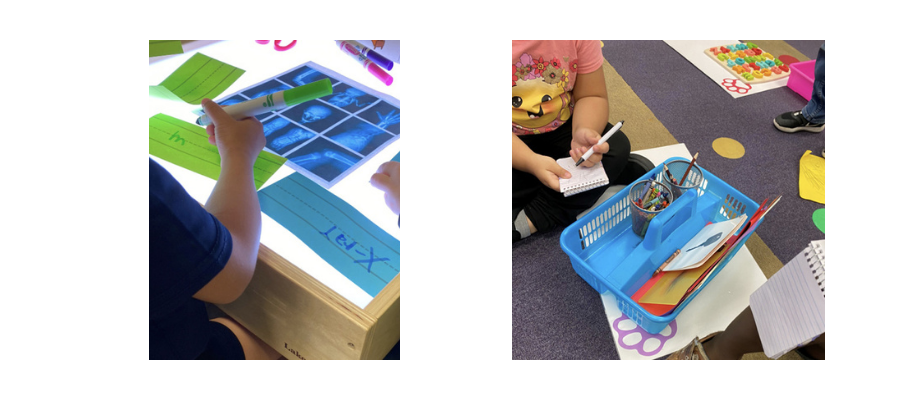
There needs to be a balance between teacher-directed and student-directed learning. Sitting in a circle for 30 minutes and listening to instruction is just not developmentally appropriate. Different formats can help. For example, learning centers can be adapted to meet children’s individual interests and needs. Small groups of children can work on Individual Education Program [IEP] goals with their teacher. This blends independent exploration with targeted, individualized support. It’s an intentional approach, and because activities align with their IEPs, children can practice key skills while staying engaged through meaningful learning.
What’s ahead for you?
I moved into my current role because I wanted the opportunity to learn and grow. I feel like this has been one of my biggest learning years, and I’m so happy with that. I’ve learned how you can adapt a physical education activity for a child with very limited physical abilities; I’ve learned ways to approach students with visual impairments. I enjoy learning new things and seeing how I can apply them to my passions of early childhood and special education.
SHARE YOUR STORY Answer a few questions to tell us about your work with young children and what NAEYC membership means to you.
NOMINATE A MEMBER Share why a NAEYC member you know should be recognized for their work with young children.
Photographs: courtesy of Alexis Rosales
Copyright © 2025 by the National Association for the Education of Young Children. See Permissions and Reprints online at NAEYC.org/resources/permissions.