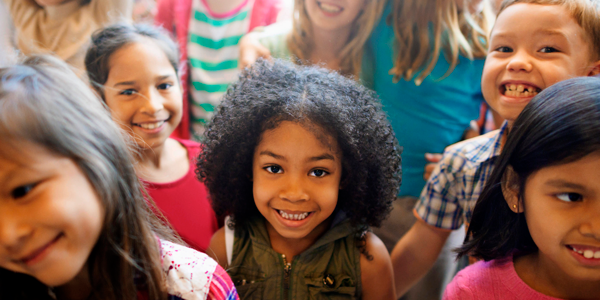
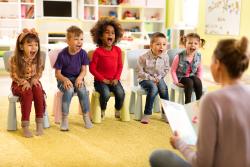
The move from preschool to kindergarten introduces children and their families to new environments with different routines, activities, and expectations.
The transition to kindergarten can be both exciting and challenging for young children and their families: Entering a new school environment means navigating new routines, expectations, social interactions, and approaches to individualized support.
The transition from preschool to kindergarten is an important part of this foundation: Research has shown that it can have lasting effects on a child’s well-being, including both short- and long-term academic impacts.
You care deeply about early childhood education. You see how policies affect children, families, and educators every day. But advocacy can still feel intimidating.
NAEYC promotes high-quality early learning for all children, birth through age 8, by connecting practice, policy, and research. We advance a diverse early childhood profession and support all who care for, educate, and work on behalf of young children.
NAEYC promotes high-quality early learning for all children, birth through age 8, by connecting practice, policy, and research. We advance a diverse early childhood profession and support all who care for, educate, and work on behalf of young children.
To help you find new books that will keep children engaged and build your classroom or program library, we’ve gathered recommendations from the final issues of NAEYC’s award-winning magazine, TYC.
Research shows that children learn content through both direct instruction and playful learning opportunities. This includes literacy development in kindergarten-to-grade 2 settings.
Storytelling is rooted in gestures, images, and shared experiences. Long before humans developed writing systems, they shared stories orally and through the images they painted on walls, structures, and pottery.
So Much More Than the ABCs: The Early Phases of Reading and Writing, revised edition, provides a comprehensive and updated overview of what literacy development looks like for children from birth to age 5.
A cozy library nook filled with well-loved books, a vibrant writing center stocked with paper, markers, and clipboards, and daily interactive read alouds and other instructional activities that immerse children in language all set the stage for learning.
Authored by
Authored by:
Julia Sisbarro, Teressa Cameron Sumrall, Randa Dunlap
Literacy Learning for Infants, Toddlers, and Preschoolers: Key Practices for Educators is written by some of the foremost early literacy experts in the field. Using eight key practices as their framework.
Authored by
Authored by:
Tanya S. Wright, Sonia Q. Cabell, Nell K. Duke, Mariana Souto-Manning