Message from the CEO: Reading Books with Children: Making Meaningful Connections While Building Early Literacy Skills

You are here
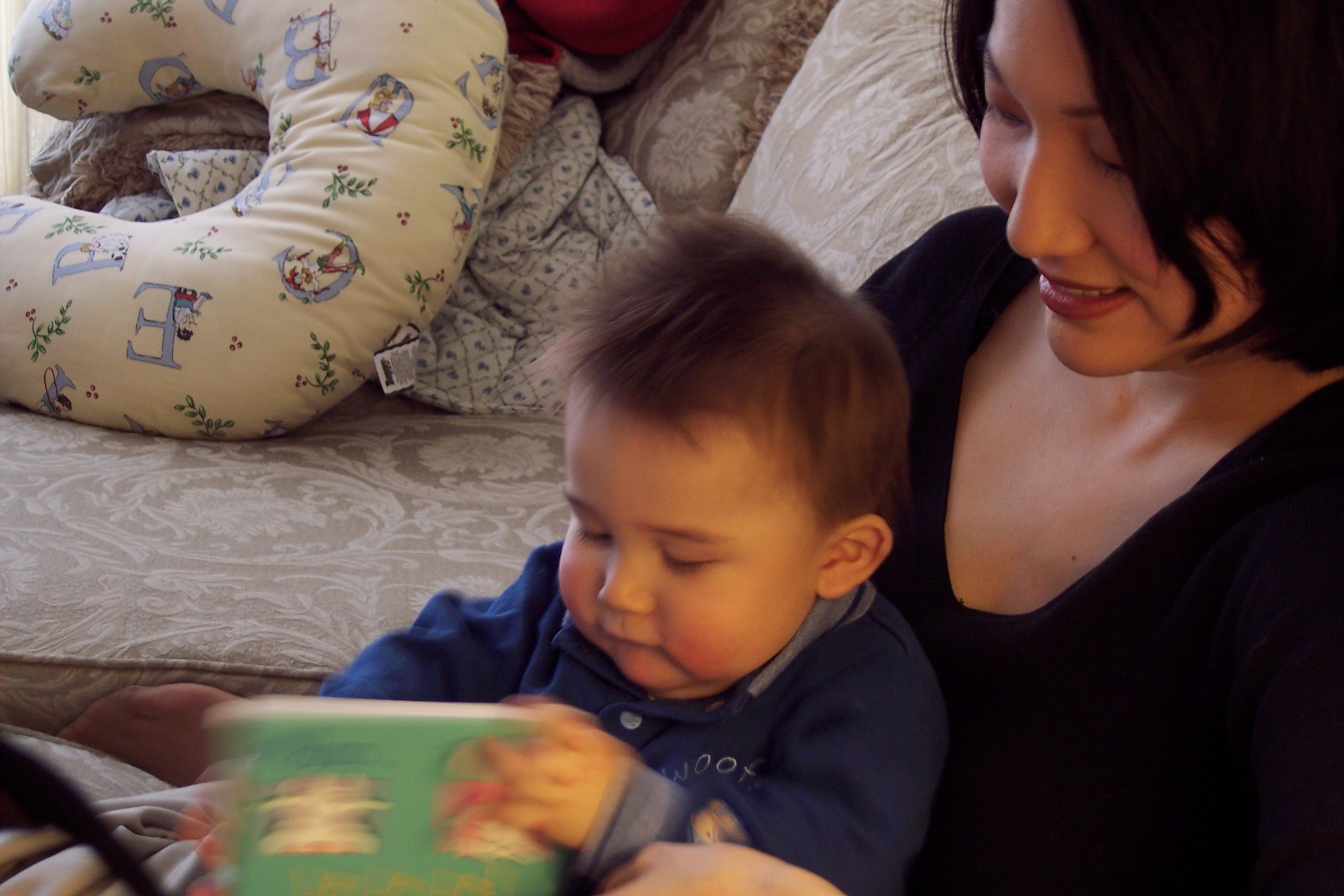
Reading books was one of my favorite activities to do with my own children when they were little. It was an opportunity to relax, connect, and have fun. We loved looking at the pictures, finding new words—the ones in the books and the made-up ones like those in Chicka Chicka ABC!—and laughing at the rhyming silliness of one of our favorite authors, Sandra Boynton. We talked about the characters, how they interacted with each other, and the emotions they were expressing.
My sons’ book choices often were tied to their interests of the moment. We read a lot of books about animals and anything on wheels, particularly cars and trains! Reading together was pure joy for us and also a critical step toward building the early literacy skills that their educators would expand upon and intentionally weave into teaching throughout the learning day.
Today, when I visit early childhood education programs around the country, I always look at the books they have in their learning environments. These offer a window into the stories children enjoy and the voices, families, and cultures that teachers uplift as children share, work together, and learn. I’m always impressed to see educators embracing developmentally appropriate, thematically integrated learning experiences to continuously build literacy skills. This includes not only thoughtfully selecting books that introduce children to new ideas about the world but also playing games to reinforce sound-letter connections, identifying rich vocabulary words and encouraging children to try them out, and creating writing opportunities in activity centers.
During a visit last year to the Brillante Early Learning Center at the Explora Science Center and Children’s Museum in Albuquerque, New Mexico, I was treated to an exciting and empowering example of intentional literacy building through a unit of study that began with books about bugs. Children were engaged in building their bug vocabularies, creating stories with bug characters, making bug-themed art, and participating in a popular hands-on experience: Touching and observing living bugs. The program director recounted how the children enjoyed finding a roly-poly curled up in its container, carefully picking it up, and showing it to their peers.
To foster a love of literacy, teachers had infused their classrooms with print and illustrations of key ideas. These included a “Bug Exploration” bulletin board that documented “What we know about bugs!” and an “Agreements” guide (“I hold bugs gently; dig carefully”). Children talked about bugs from different places and imagined the voices they might use and the silly things bugs might say if they could talk to each other or to us. Their work was intentional, playful, and developmentally appropriate.
From book selection to supporting activities, these educators were working to ensure a strong foundation in early literacy for every child. As we welcome 2026 and launch a yearlong celebration of NAEYC’s centennial, I am grateful for all of you who continue this important work every day.
Michelle Kang
NAEYC CEO
Photographs: courtesy of Michelle Kang
Copyright © 2026 by the National Association for the Education of Young Children. See permissions and reprints online at NAEYC.org/resources/permissions.