Teaching Self-Advocacy and Social and Emotional Learning
You are here
Strategies to Support Children with Disabilities
Social and emotional development, essential to everyone’s well-being, describes the skills children and adults need to self-regulate and participate in social relationships. When children develop social and emotional skills, they experience positive effects in later life, including a general sense of wellness, increased quality of life, and self-empowerment. While all children need support in their social and emotional development, explicitly teaching these and related skills, such as self-advocacy, may especially benefit children with disabilities.
According to the Collaborative for Academic, Social, and Emotional Learning (CASEL), social and emotional development has five broad components:
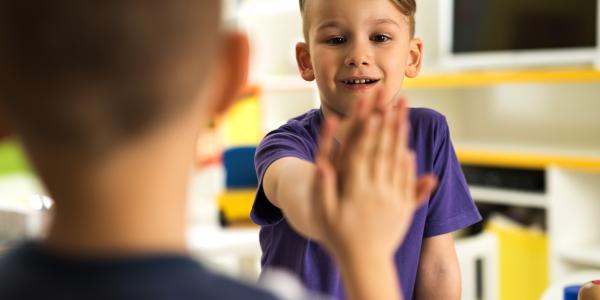
Photograph: © Getty Images. Copyright © 2026 by the National Association for the Education of Young Children. See permissions and reprints online at NAEYC.org/resources/permissions.
Laura N. Sarchet, PhD, is an assistant professor of special education at Niagara University in Lewiston, New York. She is an autistic self-advocate and former special education teacher who uses her experiences to raise awareness about autism and disability through research and practice.