Seeing Each Other’s Possibilities Through Child-Led Documentation
You are here
The hum of voices, the clatter of blocks, and the shuffle of little feet filled our kindergarten classroom. After the morning meeting, children scattered into a stretch of guided play, where structured activities and open-ended explorations wove together throughout the classroom. During this typical period of play and exploration in our classroom, Jessica approached me and asked, “Can I use the iPad today?”
We were a few weeks into a classroom-wide documentation project. While it had originally emerged as part of my doctoral research into child-led digital documentation, it had very quickly evolved into a shared journey between me and the children. I approached the project as both a researcher and a full-time kindergarten teacher, a role I have enjoyed for more than a decade. Drawing on these two perspectives, I invited the children to take turns using the iPad camera to capture moments during the day that they found interesting and meaningful.
I had initially imagined this project as a way for the children to take over as classroom communicators, possibly replacing a teacher-created newsletter. Yet as the weeks passed, it became clear that the children’s capturings had made them documentarians of their own learning. Jessica’s request that particular morning was part of our new rhythm. However, as I nodded and said, “Of course! Go ahead,” I didn’t realize that her documentation would soon shift how I understood belonging, agency, and the power of noticing in early childhood spaces.
Making Space for Children’s Perspectives
Our kindergarten classroom is part of a public elementary school that serves an economically and linguistically diverse population of children and families. We are situated in a suburban district in the Midwest where the tension among state legislation, district-adopted academic structures, and play-based, inquiry-driven practice is real and ongoing. Within this full-day program, I am committed to creating opportunities for children to explore their own interests, build relationships, and contribute to the life of the classroom as they progress toward important learning goals. The documentation project grew out of my desire to invite children into that work more intentionally—not just as learners, but as meaning makers and collaborators as well.
This project was firmly rooted in developmentally appropriate practice and its recognition that children learn best when they are actively engaged and trusted to make choices that matter (NAEYC 2020). By inviting children to take on the role of documentarian, the project supported their natural curiosity, creativity, and sense of agency. It also ensured that every child’s perspective and ways of seeing the classroom could be shared and valued—a key goal of advancing equity (NAEYC 2019). Documentation became a way to affirm children’s identities and voices in our community.
As the children and I prepared to launch the project, we spent a great deal of time discussing what it meant to document and to be a documentarian. To establish a shared language and understanding, we read picture books about documentation and capturing stories. These included Take a Picture of Me, James Van Der Zee!, by Andrea J. Loney; Dreamers, by Yuyi Morales, and You Are a Story, by Bob Raczka. We also engaged in group discussions around the role documentation might play in our learning while developing shared norms and expectations for using our class iPad.
Through our collaborative dialogue, the children determined that documentation was “a way of telling a story” in the classroom. They generated a list of ways to tell stories that included drawings, writings, artistic representations, oral discourse, videos, and photographs. The overarching goal of this project was to explore how child-led digital documentation could deepen children’s engagement with classroom literacy practices. It supported state literacy standards that emphasize developing a purpose for reading, writing, and communication.
Documentarians in Action
Each week, one child stepped into the role of documentarian for three to five days, depending on their level of interest. Children who chose to participate were given unrestricted access to the iPad during the school day, including during special classes (music, art, and library; we collaboratively excluded gym class) and at recess when I was outside on duty. We met at the beginning and end of their time to reflect, curate, and organize their captured moments. From the beginning, I resisted the urge to suggest what the children should capture. If I was going to encourage them to trust their emerging curiosities, I would need to trust them as well.
In most cases, the children were immediately independent. They entered into the role of documentarian confidently and with a clear picture of what they wanted to capture. When necessary, I would scaffold their recordings by asking questions like “What do you think is important for people to see?” or “If you were telling someone about today, what might you want to show them?”
Over time, I noticed that each child had their own documentation style. While some children focused on social moments, others focused on their own work, and some gravitated toward capturing small details that others might miss. As they made these choices, the children demonstrated observation, discernment, and perspective-taking skills. They were deciding what was meaningful, why it mattered, and how to represent it. Some children practiced empathy by highlighting their peers’ work. Others played with perspective and framing, suggesting an emerging ability to notice relationships between small details across seemingly separate moments.
At the end of each child’s documentation period, I met with them one-on-one to reflect and curate their work. Together we looked through their videos and photos asking, “What do you want to share?” and “Why are these photos important?” Each child selected a few pieces to present to the other children. These were then put into a digital slideshow along with their dictations. Such moments of reflection and curation gave the children an opportunity not only to share their perspectives, but to understand that their way of seeing mattered both to me and to the classroom community. What began as a research protocol quickly became something more: A daily invitation to slow down, to notice, and to recognize that children, when trusted, will often see what is most worth seeing.
Practice in Action
J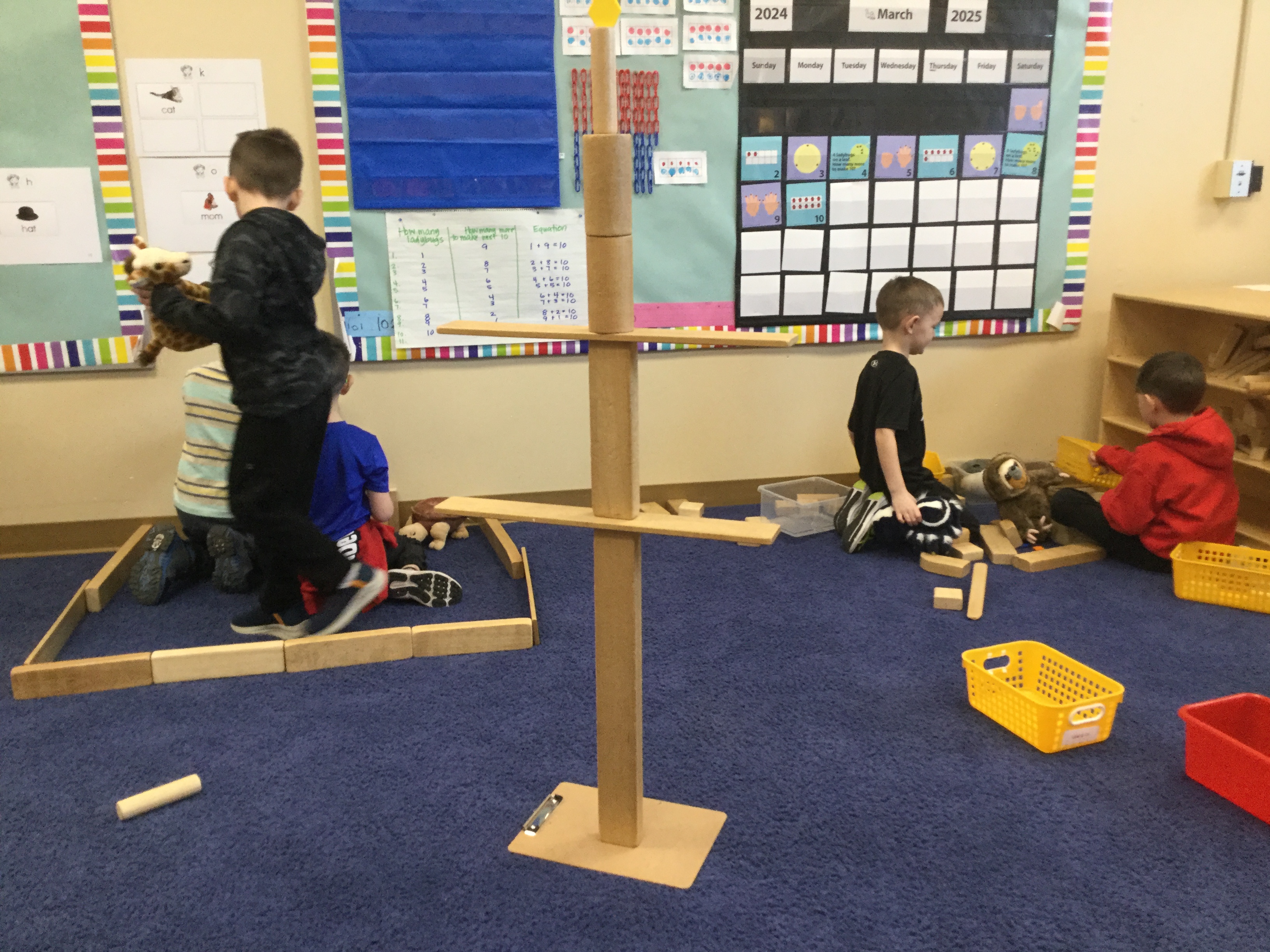 essica was a keen observer. While she didn’t always jump into group activities, she watched closely, listened carefully, and tended to find her own way into the classroom’s rhythms. That morning, in her role as documentarian, she moved deliberately around our learning space. She paused in the block area, where Quincy, Mason, and Daniel were building a towering structure out of large, wooden blocks. She stood beside them, with the iPad poised and ready for action. As the boys negotiated their construction, she snapped a few pictures and recorded a short video of them placing the final block.
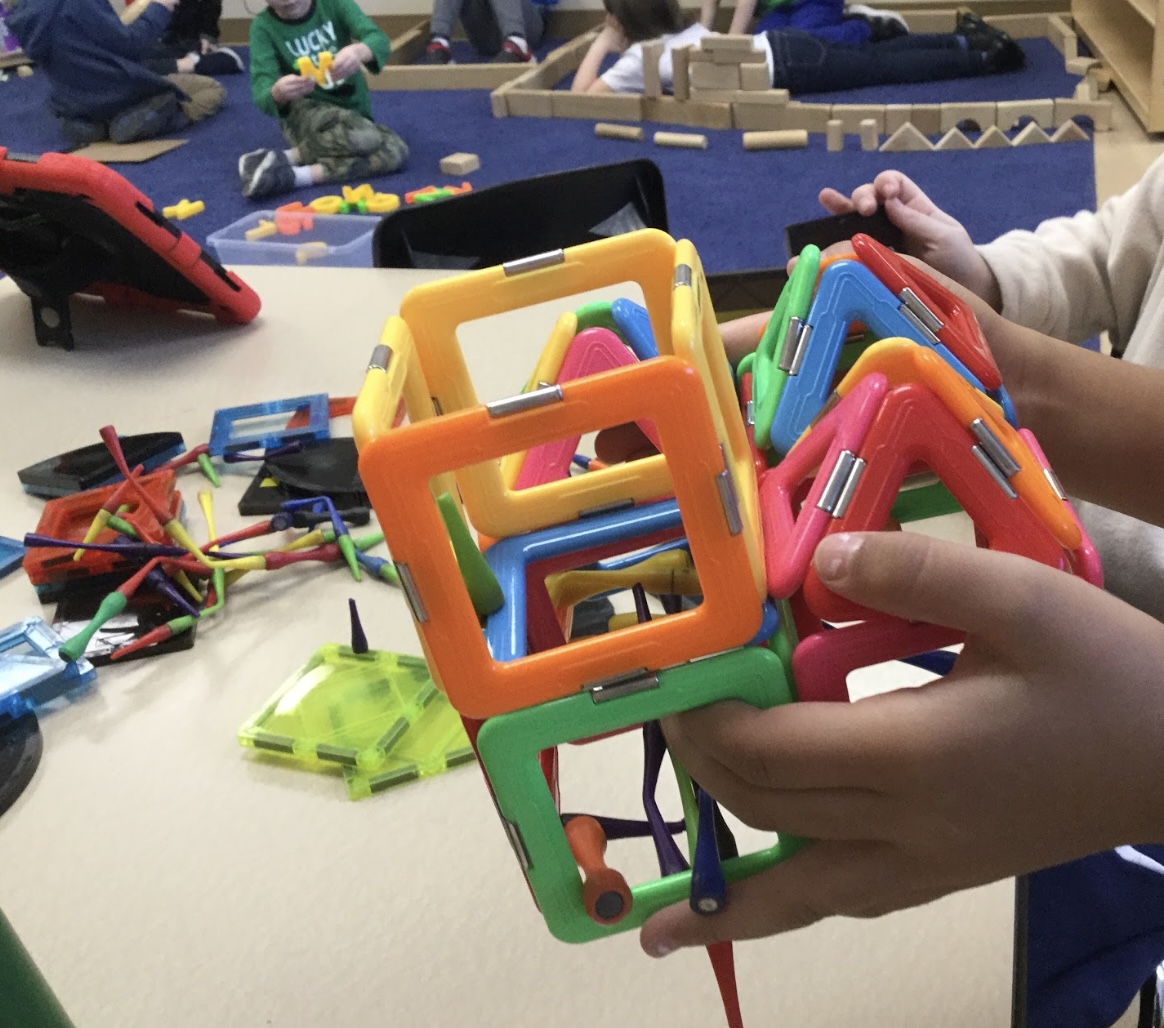
After engaging with the boys for a bit, Jessica turned and continued visiting other classroom spaces. At one point, she went to a corner of the room where Teeka was working alone building a small structure from magnetic blocks. As Teeka carefully aligned the blocks in a complex, three-dimensional shape, Jessica exclaimed, “Wow! That’s really cool!” and took photos from multiple angles. I watched quietly from across the room and was struck by Jessica’s focus and intentionality. She was capturing more than images: She was recognizing something meaningful and worthy of attention. In that moment, it was clear that the act of documentation had shifted from task to thoughtful practice.
Later, during our reflection time, I asked Jessica to tell me about her photos. She pointed first to her documentation of the boys and said, “They were working so hard, and I was proud of them. They almost knocked it down, but they didn’t give up.” Then, looking at the next few photos, she smiled and said, “Teeka made this straight from her mind, from her imagination. She’s really creative.”
I was struck by the clarity and kindness of Jessica’s observations. Besides documenting events, she was noticing values like persistence, effort, and creativity. Jessica was naming what mattered to her. Through her lens, she made visible the different ways her peers contributed to our shared classroom space, reminding me of the importance of making room for children to see and recognize each other’s efforts and persistence.
Reflections
 My experience observing Jessica’s documentation process and listening to how she conceptualized its importance became a turning point in how I view the role of child-led documentation in our classroom. Her act of seeing others and articulating why their work mattered was relational and generous. Jessica’s explanation showed how children can affirm and support each other when they are given the tools, time, and trust to do so. This moment led me to pay closer attention to how children interpret and respond to each other’s work and how documenting through a peer’s eyes can shape children’s sense of inclusion and worth. The insight I carry forward is that belonging is not just something we as teachers create for children. It is something they cocreate in small and powerful ways when they are trusted to participate in the life of a learning community as thinkers and storytellers. Jessica’s lens gave me a deeper understanding of what it means to build an empathetic, interconnected community—one where we make time to see each other, to name what we value, to truly listen to children, and to believe that every child’s perspective has something to offer.
Invitations for Practice
For those considering how to incorporate and support child-led documentation, this experience reminded me that the most powerful insights often emerge when we create time, offer tools, and then step back. In these moments, it means listening differently (Clark 2023). Making space for children’s perspectives also means honoring their rhythms, their languages, and the stories they find worth telling. For Jessica, that meant celebrating persistence and creativity but for another child, it might mean something entirely different.
Curating documentation became just as important as the act of capturing photos. During those shared moments, children practiced reflection, articulation of their ideas, and generosity. They came to see their peers and themselves with deeper appreciation. These are small, slow practices, but they are foundational to building a community of learners rooted in trust and mutual regard. When we treat children not only as learners but as documentarians, we begin to see our learning spaces through a richer, more compassionate lens.
Photographs: header © Getty Images; other photos, courtesy of Andrea Sanchez
Copyright © 2025 by the National Association for the Education of Young Children. See Permissions and Reprints online at NAEYC.org/resources/permissions.
References
Clark, A. 2023. Slow Knowledge in the Unhurried Child: Time for Slow Pedagogies in Early Childhood Education. Routledge.
NAEYC. 2019. “Advancing Equity in Early Childhood Education.” Position statement. NAEYC. naeyc.org/resources/position-statements/equity.
NAEYC. 2020. “Developmentally Appropriate Practice (DAP).” Position statement. NAEYC. naeyc.org/resources/position-statements/dap/contents.