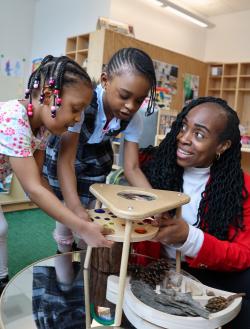
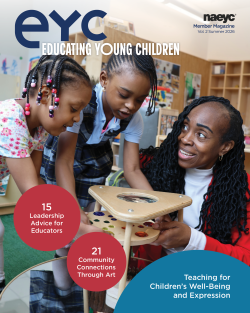
As we reach the midway point in NAEYC’s centennial year, we’re reflecting on where we’ve been as the membership organization for tens of thousands of early childhood education professionals.
NAEYC promotes high-quality early learning for all children, birth through age 8, by connecting practice, policy, and research. We advance a diverse early childhood profession and support all who care for, educate, and work on behalf of young children.
NAEYC promotes high-quality early learning for all children, birth through age 8, by connecting practice, policy, and research. We advance a diverse early childhood profession and support all who care for, educate, and work on behalf of young children.
As part of NAEYC’s centennial, Year of Reflections invites educators, advocates, and community members to share the experiences that have shaped their journeys in early childhood education.
The smallest SEO and local SEO efforts can go a long way for child care programs to get noticed by families looking for their services. This blog layouts discusses small fixes for big wins.
NAEYC announced today a three-year grant from the Gates Foundation to expand access to high-quality early childhood curriculum and strengthen NAEYC’s presence in the growing landscape of publicly-funded pre-kindergarten.
Early childhood educators do some of the most important work in our communities. Yet despite the skill and expertise the work requires, early childhood educators remain among the most underpaid professionals in the country.
Carlyn Rahynes, founding principal of Learning Through Play Pre-K Center, reflects on lessons learned and the significance of NAEYC's 100th anniversary.
NAEYC promotes high-quality early learning for all children, birth through age 8, by connecting practice, policy, and research. We advance a diverse early childhood profession and support all who care for, educate, and work on behalf of young children.
Because of intensified pressure on teachers to improve students’ performance and prepare them for standardized tests, educators and children are now navigating a significant increase in the number of formal assessments they experience yearly.
This is an excerpt from the upcoming NAEYC book No Single Story: Amplifying the Voices of Asian American and Native Hawaiian, Pacific Islander Early Educators, Native Hawaiian by educator Nicol Russell.
Every May, we pause during Teacher Appreciation Week to say thank you to the educators who show up for children every single day. And every year, "thank you" feels both necessary and insufficient.
There is a moment every early childhood educator knows. A child is deep in play, completely absorbed, doing something that looks, to an untrained eye, like nothing in particular.
NAEYC promotes high-quality early learning for all children, birth through age 8, by connecting practice, policy, and research. We advance a diverse early childhood profession and support all who care for, educate, and work on behalf of young children.
NAEYC promotes high-quality early learning for all children, birth through age 8, by connecting practice, policy, and research. We advance a diverse early childhood profession and support all who care for, educate, and work on behalf of young children.
This issue of Young Children explores what educator agency looks like in action, how it connects to intentional teaching, and how it benefits everyone in the early childhood ecosystem.