From Our President. We Can Move Mountains! Teaching Young Children About Nature, Climate, and Our Environment

You are here
Whoa! That cloud looks angry!
How is it raining and sunny at the same time?
Mom, you know when we go to the beach we can’t litter because the plastic will get on the turtle’s neck, and it can hurt him so, so bad.
—Isaiah Durden, age 5
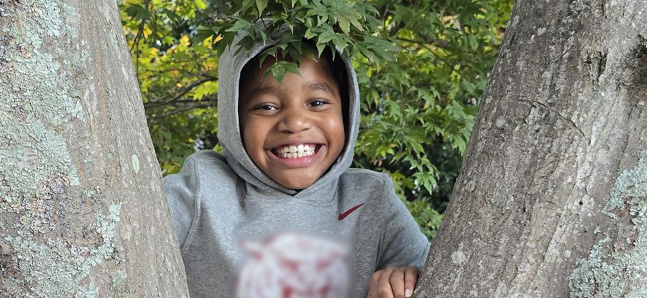
As seen by the quotes from my 5-year-old son, young children have a natural curiosity about the world around them. They are constantly engaging with and exploring our environment, climate, and nature. Isaiah’s observations of and explicit learning about nature and weather demonstrate young children’s active use of scientific questioning, vocabulary, and practical applications to their daily lives.
In this edition of Young Children, articles focus on building young children’s awareness, understanding, and engagement in nature-based experiences, climate, and environmental education. As early childhood professionals, let’s take a moment to consider our own experiences with nature, climate, and the environment. Wherever you are at this moment, find a window or a door, and make observations: What do you see? Hear? Feel?
When I gaze out my kitchen window, I see green Georgia pine trees with leaves slowly falling to the pavement. I hear the chirping sound of a nearby robin. When I touch the window, it feels cool—even though my weather app says it’s 89 degrees outside with 30 percent humidity at only 10:09 a.m. When I think about my feelings at this moment, I am joyful that the skies appear calm and will not interrupt my afternoon school pickup or my children’s after-school soccer practice.
Again, what do you see, hear, and feel, and what emotions are triggered for you?
It is important for us as early childhood professionals to consider our own connection and experiences with nature as we begin the journey in teaching young children concepts related to the environment, climate, and nature. So first, I’d like to start with the concept of biophilia. Biophilia is a love of nature and the understanding of our role as humans in caring for and engaging respectfully with it. It is the understanding of the reciprocal relationship between how we care for our natural world and how the climate is or is not impacted by this care and consideration.
Caring for the environment directly impacts the climate. It is climate care! For example, the amount of carbon dioxide and other harmful gases we put into our atmosphere affects the health of our soil, water, air, forests, and oceans. In practice, caring for our natural world looks like young children learning about our natural ecosystems while also learning about ways to reduce human pollution. They developmentally understand and take pride in caring for our environment and therefore will contribute to cleaner air, water, and soil within their communities.
When we teach children about nature, the environment, and climate, we should use a multisensory approach. Part of our role as educators is to go beyond the visual and encourage children to consider what they feel, hear, and can touch. What do they hear (or imagine hearing) as they observe an ant carrying a crumb across the pavement? How does the sound of thunder from the clouds make them feel? How can they describe what it feels like as they touch the puddle that formed on the playground after this morning’s rainstorm? These are all ways to activate young children’s natural curiosities, interests, and prior knowledge about the world around them.
NAEYC offers several resources on developmentally appropriate ways to teach these concepts to young children. Nature-Based Early Childhood Education, by Monica Wiedel-Lubinski, is a new book that focuses on what nature-based education is, its benefits, and how educators can build nature connections with children. The Young Children and Teaching Young Children archives are rich with articles about nature-based learning, including
- “Teaching and Learning in the Outdoors: Nature as a Springboard to Biliteracy Development,” in the Summer 2025 issue of Young Children
- YC’s November 2018 cluster on A Natural Choice: Learning Outdoors
- Teaching Young Children’s Fall 2021 theme on Nature Learning Indoors and Out
With the lens I bring as your NAEYC Board president, we also must continue to reflect on how we are creating equitable and culturally responsive spaces for young children. Who among our communities, children, families, and colleagues has access to clean air, water, and soil? Who doesn’t, and why? Equity is about asking these questions. It is also about what I (and we) will do when we identify inequitable access to healthy natural environments.
For example, what will we do about children and communities who don’t have access to the health and social benefits of safe parks and green spaces? What will we do about children and communities who don’t have access to clean air and water? About children and communities that experience ongoing trauma, displacement, and few resources to support them during crises due to extreme weather (like flooding, wildfires, droughts, or natural disasters) and hazardous facilities (such as factories, refineries, and landfills)? It is important to emphasize that in each of these cases, children and communities who are marginalized are disproportionately impacted.
As we teach and learn with children how to care for and understand our environment, nature, and climate, we must explicitly teach the importance of advocating for environmental equity. In her music video “Love Drought,” Beyonce features herself and other women marching into the ocean, emphasizing the healing power of water and sisterhood in the words “You and me can move mountains.” In early childhood education, we have the power (and opportunity) to collectively move mountains in advancing children’s knowledge and understanding of nature, the environment, and climate while also creating spaces to explore and learn about environmental equity and advocacy.
As you explore this edition of YC, I invite you to identify one mindset you will change and one practice you will implement. Also take a moment to explore and become curious about our natural world and the opportunity to give it a little TLC!
Onward and upwards in early childhood education!
Photographs: courtesy of Tonia R. Durden
Copyright © 2025 by the National Association for the Education of Young Children. See Permissions and Reprints online at NAEYC.org/resources/permissions.