Message in a Backpack.™ Make Music Part of Your Family Routine
You are here
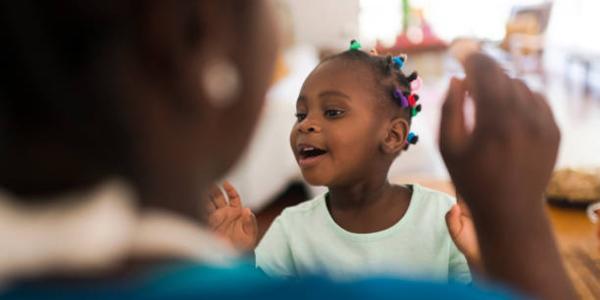
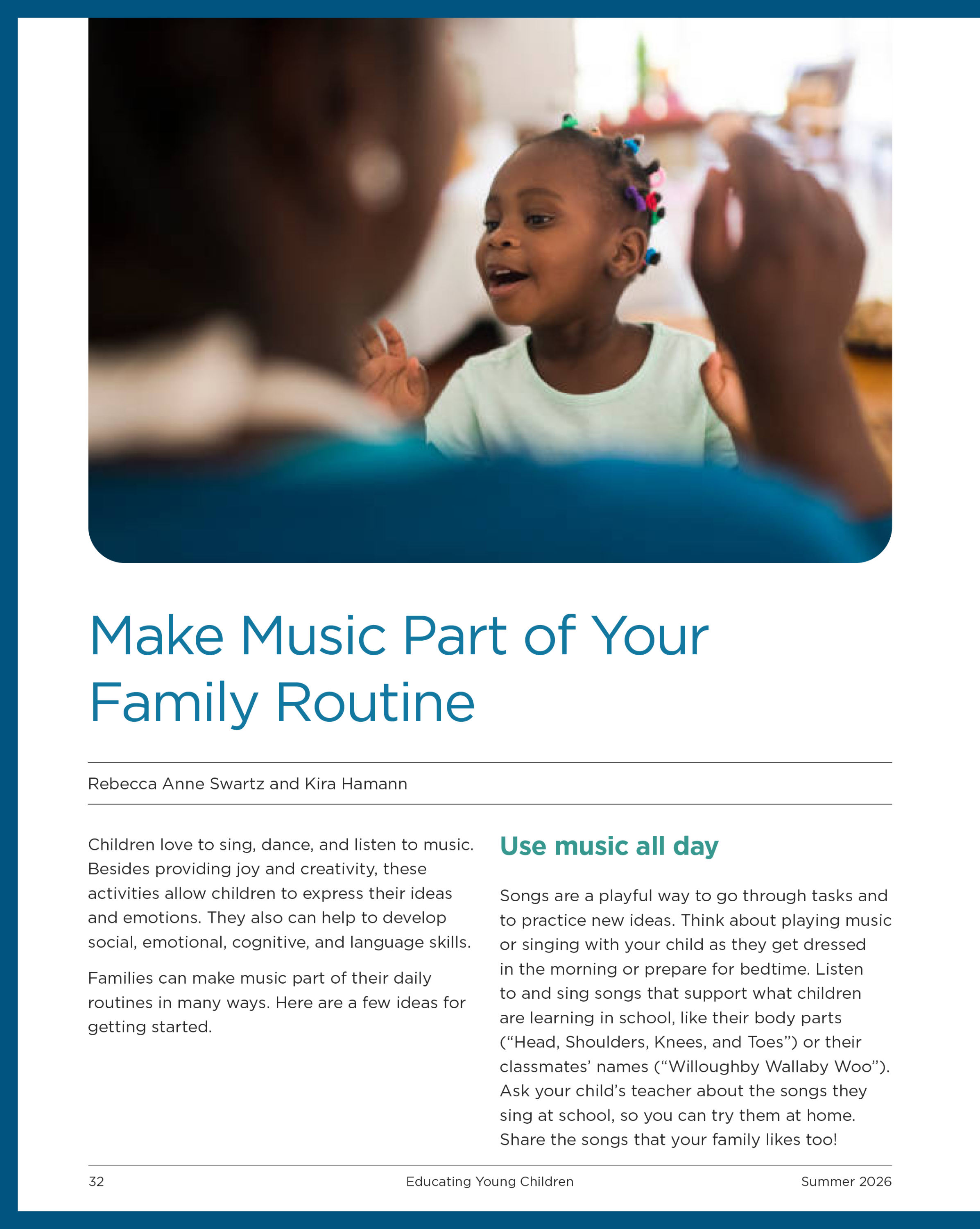
Children love to sing, dance, and listen to music. Besides providing joy and creativity, these activities allow children to express their ideas and emotions. They also can help to develop social, emotional, cognitive, and language skills.
Families can make music part of their daily routines in many ways. Here are a few ideas for getting started.
1. Use music all day
Songs are a playful way to go through tasks and to practice new ideas. Think about playing music or singing with your child as they get dressed in the morning or prepare for bedtime. Listen to and sing songs that support what children are learning in school, like their body parts (“Head, Shoulders, Knees, and Toes”) or their classmates’ names (“Willoughby Wallaby Woo”). Ask your child’s teacher about the songs they sing at school, so you can try them at home. Share the songs that your family likes too!
2. Build on your child’s interests
Is your child passionate about outer space? Sing “Twinkle, Twinkle, Little Star” or “I Don’t Want to Live on the Moon.” Do they love animals? Sing “Los Pollitos Dicen (The Little Chicks Say)” or “Going on a Bear Hunt.” You can find and learn new songs by accessing old CDs, records, and online sources. Be sure to teach your child the songs that you loved when you were little or that were important to your family.
3. Try out props, and add movement
Pull out your pots and pans or some old scarves, and invite your child to try different ways to move or make sounds with these objects. Encourage them to sing and move faster or slower, with bigger or smaller movements, depending on their interests and needs. These activities are fun, and they help your child use their body to express themselves.
4. Incorporate songs from different cultures
Music is a powerful tool for making connections to your own and others’ cultures. Using songs and chants in new languages and from other places will introduce your child to new ideas, experiences, and words. Check out “Frère Jacques (Brother John),” “Jambo (Hello),” “Zhao Pengyou (Looking for a Friend),” and “De Colores (All the Colors)” for dancing, call-and-response activities, and greetings.
5. Take part in the fun yourself!
Your child will follow your lead, so sing and dance with them. Remember that you don’t need to be perfect in how you sound and move. It’s about connecting with your child through joyful, playful musical moments.
This message is meant to be printed out, photocopied, and sent home with children as a resource for families!
Photograph: © Getty Images. Copyright © 2026 by the National Association for the Education of Young Children. See permissions and reprints online at NAEYC.org/resources/permissions.