NAEYC promotes high-quality early learning for all children, birth through age 8, by connecting practice, policy, and research. We advance a diverse early childhood profession and support all who care for, educate, and work on behalf of young children.
Good nutrition is important for promoting healthy growth and development in young children, who are rapidly developing mentally and physically in the early years.
Children start developing their self-image at a young age. As children grow, adults can help them form positive views or perceptions of themselves, including about their physical characteristics and behaviors.
The benefits of outdoor play aren’t just physical. It allows children to challenge themselves and become appraisers of risk. This, in turn, helps develop cognitive, social and emotional, and self-regulatory skills.
In this article, we share strategies for incorporating fine and large motor skills into daily learning experiences and highlight a lesson from one preschool class.
Authored by
Authored by:
Amy August, Maria Fusaro, Andrea Golloher, Emily Slusser, Jihyun Lee, Julie Sliva Spitzer
With a few simple tools—dice, rulers, number lines, and spinners—children can infuse math into big body activities. Here are nine easy activities for integrating math in the gym and beyond!
As children explore and observe nature, they become more aware of, and empathetic to, the plants and animals who share the natural world. Try these nature-based mindful activities indoors or outdoors with your tots!
NAEYC promotes high-quality early learning for all children, birth through age 8, by connecting practice, policy, and research. We advance a diverse early childhood profession and support all who care for, educate, and work on behalf of young children.
Increasing core strength and hand–eye coordination can help preschoolers improve their gross motor abilities. Consider these activities for bringing active play inside!
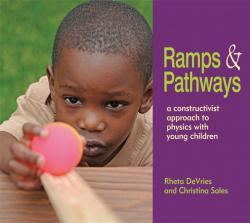
If you think the words young children and physics don’t belong together, think again. Based on the theories of Piaget and the work of DeVries and Sales, this book successfully makes the case for building a constructivist approach to physical science learn