The current administration has expressed interest in reducing regulatory requirements across sectors, and similar discussions have also emerged in early childhood education, including around Head Start and the Child Care and Development Fund (CCDF).
This Congress, NAEYC has endorsed bipartisan, legislation introduced in the House and the Senate to reauthorize the Child Care and Development Block Grant (CCDBG) – the Child Care Modernization Act.
Throughout the Congressional appropriations process, NAEYC advocates for funding for key federal programs that support children and families’ access to high-quality early childhood education opportunities.
Throughout the Congressional appropriations process, NAEYC advocates for funding for key federal programs that support children and families’ access to high-quality early childhood education opportunities.
On May 12, 2026, the U.S. Department of Health and Human Services’ Administration for Children and Families (ACF) announced changes to the Child Care and Development Fund (CCDF).
Mayor Bowser’s proposed Fiscal Year 2027 budget eliminates the salary component of the Early Childhood Educator Pay Equity Fund, a $60 million cut that would directly affect more than 4,000 educators.
In April 2026, the White House released its fiscal year 2027 budget request, providing insight into the President’s priorities for the year ahead, including federal early education programs like the Head Start and CCDBG.
Families are eligible for child care subsidies only if their assets do not exceed $1 million, as self-certified by the applicant. However, federal statute or regulations do not further specify which assets should be included or excluded.
The survey results and accompanying testimonies demonstrate a clear crisis of affordability for the early childhood education field and the children and families they serve.
You care deeply about early childhood education. You see how policies affect children, families, and educators every day. But advocacy can still feel intimidating.
In the Summer of 2025, Congress passed H.R. 1 - or “the One Big Beautiful Bill” or the Reconciliation legislation - which included a number of changes to Title IV of the Higher Education Act.
James L. Hymes Jr., a professor of education in New Paltz, New York, wrote the opening excerpt in an article reflecting on the first 25 years of the National Association for Nursery Education, NAEYC’s predecessor.
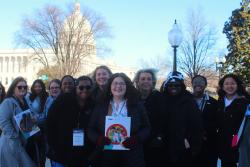
More than 400 early childhood advocates from across the country gathered in Washington, D.C., for this year’s Public Policy Forum—bringing their passion, expertise, and unwavering commitment to young children and educators to Capitol Hill.
Thousands of child care providers surveyed by NAEYC document a year of tough choices as rising costs, reduced public funding, and educator burnout threaten families and the economy.
Today, we speak out because the children we serve are in crisis. We call on federal, state, and local officials to implement immediate protections for children.
NAEYC's response to the Administration recently announced plans to freeze or delay federal child care funding across the country in response to unfounded fraud allegations in Minnesota.
More than 400 early childhood advocates from across the country gathered in Washington, D.C., for this year’s Public Policy Forum—bringing their passion, expertise, and unwavering commitment to young children and educators to Capitol Hill.
NAEYC's response to the early childhood educator, with legal authorization to work in the United States, being detained by federal immigration officials at her child care program, in front of children and families.