NAEYC promotes high-quality early learning for all children, birth through age 8, by connecting practice, policy, and research. We advance a diverse early childhood profession and support all who care for, educate, and work on behalf of young children.
As we welcome the Lunar New Year on February 17, 2026, the Year of the Fire Horse, we are reminded that across cultures, the turning of a new year carries universal meaning: hope, renewal, family, and the promise of fresh starts.
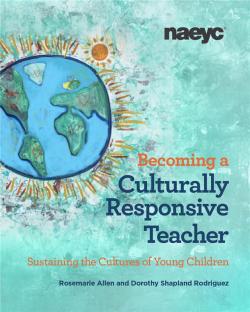
The culturally responsive strategies laid out in this book help you to understand the influences of your own culture on your teaching and to center children’s cultures.
Author Jean Simpson highlights four African American early childhood educators who have made significant contributions to the early childhood education field.
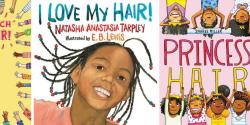
STEM-focused children’s books that span genres and highlight gender-, ability-, culturally, and racially diverse characters enhance all children’s STEM learning.
NAEYC promotes high-quality early learning for all children, birth through age 8, by connecting practice, policy, and research. We advance a diverse early childhood profession and support all who care for, educate, and work on behalf of young children.
Authored by
Authored by:
Tahnee L. Wilder, Ashley Y. Grays, Fanica Young, Danica Moise, Sharde Theodore
To empower our children to embrace their own identities and the diversity around them, we need to first engage in identity-affirming, self-reflective practices ourselves.
In this article, we share five practices that early childhood educators can follow to become culturally competent in building relationships with Black fathers of children in their schools.
To create equitable classrooms and programs, early childhood educators must embrace the concepts of anti-racism and use it to inform their classroom practices.
Authored by
Authored by:
Rosemarie Allen, Dorothy L. Shapland, Jen Neitzel, Iheoma U. Iruka
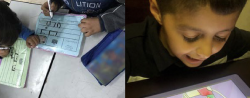
This article on digital storybooks used in early childhood settings provides an international collaboration comparing teachers’ and children’s interactions in two cultural settings.
With the infrastructure and steady, deep supports NAEYC advocates, we have the chance to address longstanding questions and issues that prevent teachers of color from achieving their higher education dreams.
With the infrastructure and steady, deep supports NAEYC advocates, we have the chance to address longstanding questions and issues that prevent teachers of color from achieving their higher education dreams.
It is important that educators and researchers pay attention to immigrant children’s experiences and honor and actively incorporate their transnational expertise into early learning settings.
In this article, we describe how and why social justice education is important for early childhood education. We offer a district and classroom example of how social justice approaches to early childhood education can increase its positive impact.