Chris Amirault, school director of Tulsa Educare MacArthur in Tulsa, Oklahoma, shares the work he and his staff are doing to address racism and bias. He and six of his colleagues recently gathered to share their approaches and insights.
Authored by
Authored by:
Chris Amirault, Melodie Benish, Michelle Bowers, Precious Harris, Thena Knight, Nicole Tate, Jennie Williams
Integrating an equity approach to diversity into early childhood education programs calls for strategic leadership. In this article, we describe the key concepts and strategies for leading change toward equity and diversity in ECE programs.
Authored by
Authored by:
John Nimmo, Debbie LeeKeenan, Louise Derman-Sparks
This article examines efforts made toward removing racial and ethnic biases, addresses our current state as a field, and asserts how the field must be committed to advance equity with the assets of children, families, and communities coming first.
Authored by
Authored by:
Felicia L. DeHaney, Carla Thompson Payton, Alandra Washington
Regarding the advancement of equity in ECE, the following article focuses on people of African descent and speaks to how and why knowing their history can shed light on their current practices and help us design more responsive programs.
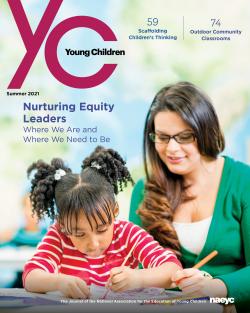
Nurturing Equity Leaders: Where We Are and Where We Need to Be
The Summer 2021 issue of Young Children includes a cluster of articles drawing on the upcoming NAEYC book, Advancing Equity and Embracing Diversity in Early Childhood Education: Elevating Voices and Actions.
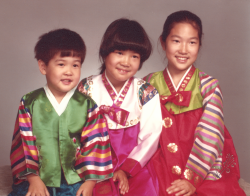
As Asian American Pacific Islander Month comes to a close, I’ve been reflecting on my own experience as the daughter of Korean immigrants. Asian American Pacific Islander is a broad term encompassing many cultures and stories.
We stand with the Asian American Pacific Islander (AAPI) community and wrap our arms and our actions around our staff, members, families, children, and allies who see themselves and their families in these women.
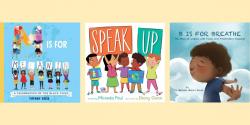
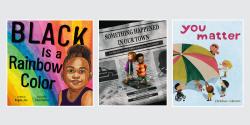
This is the first article in a two-part series that explores promoting children’s identity, agency, and voice regarding race through picture books. Included in this article are three exemplary books that early childhood educators can use to foster critica
Children need help making sense of what they are seeing and hearing. These conversations also offer us important teachable moments to engage young children in discussion about their identities, human diversity, fairness and unfairness, and the right of pe
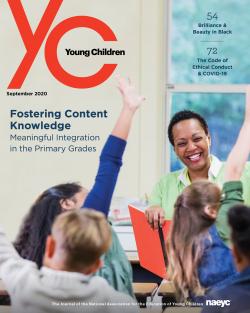
Fostering Content Knowledge: Meaningful Integration in the Primary Grades
The September 2020 issue of Young Children includes a cluster of articles that showcase the power of integrating science, math, technology, literacy, and social studies to make learning meaningful and content-rich across the primary grades.
Through inquiry, teachers and young children can create authentic, organic learning that informs their understanding of themselves, of others, and of the world they live in.
During these times of heightened stress due to COVID-19, children and their families want to be seen and to know that they matter. Without this recognition of their humanity and their lived experiences from teachers...
When hearing the words suspension and expulsion, most people do not think about children 5 and under. However, young children in state-funded preschool settings are expelled at three times the rate of K–12 students, as private school students.
Authored by
Authored by:
Sarah C. Wymer, Amanda P. Williford, Ann S. Lhospital
Children rely on adults to help them figure out what things mean. Children’s curiosity, puzzlement, and anxiety provide rich opportunities for adults to respond to their attempts to understand what they observe happening in their world.
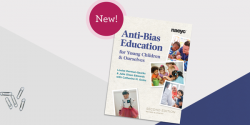
This revised edition provides the latest research-based guidance for supporting children's social identities, including gender, race, culture, abilities and more!