NAEYC promotes high-quality early learning for all children, birth through age 8, by connecting practice, policy, and research. We advance a diverse early childhood profession and support all who care for, educate, and work on behalf of young children.
Carlyn Rahynes, founding principal of Learning Through Play Pre-K Center, reflects on lessons learned and the significance of NAEYC's 100th anniversary.
NAEYC promotes high-quality early learning for all children, birth through age 8, by connecting practice, policy, and research. We advance a diverse early childhood profession and support all who care for, educate, and work on behalf of young children.
Incredible learning unfolds in infant and toddler settings. The period from birth to age 3 represents a time of vast and exciting change as children move from early milestones to more advanced physical achievements.
The Spring 2026 issue of Educating Young Children is focused entirely on the preschool-to-kindergarten transition and reading it this week hit me differently than it might have at any other time.
NAEYC promotes high-quality early learning for all children, birth through age 8, by connecting practice, policy, and research. We advance a diverse early childhood profession and support all who care for, educate, and work on behalf of young children.
Family engagement in early childhood education is essential, as are strong, reciprocal relationships and collaboration among early childhood educators and families.
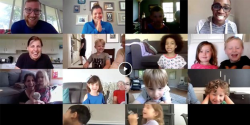
In this article, we share our experiences developing and implementing a virtual program during the pandemic that may serve as a guide for others looking to develop teaching plans that involve online learning when crises arise.
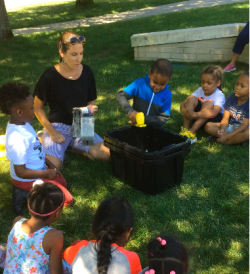
In this article, we share contextual information about using the engineering design process our program, including how we adapted a research-based curriculum to meet the individual needs of children with disabilities.
The lessons of COVID-19 have been unexpected and surprising gifts. I have experienced what community feels like as Children Campus’ director, and I sense that feeling has been contagious.
When I explored the options Zoom provided during virtual meetings, I discovered that its Spotlight feature and the mute button were two ways to work toward learning goals and an approach focused on the whole child.
We may not be able to control the spread of the virus, the changing mandates, or the inequities and social justice issues intensified by the pandemic, but we can control how much our children feel loved by us.
This in-depth look at a yearlong investigation that emerged from a class visit to a school garden gives teachers ideas for extending garden learning across literacy, math, and science content areas.
Authored by
Authored by:
Kristin N. Rainville, Anna E. Greer, Cristina Sandolo