We are pleased to launch Equity in Action, a blog series exploring the many ways early childhood educators and administrators, higher education faculty members, policymakers, advocates, and other ECE allies can bring this statement to life in practice.
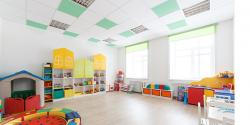
As explained in this article, the decorations in your preschool classroom can play an important role in helping children feel welcomed, calm, and ready to learn.
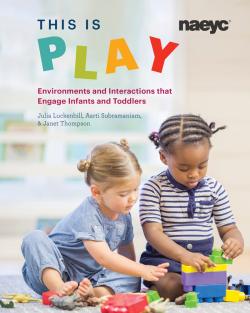
With its spot-on ideas and suggestions, delightful anecdotes, and engaging photos, you’ll gain a new appreciation for infants’ and toddlers’ competence and curiosity and how important your role is in the birth-to-3 adventure.
Authored by
Authored by:
Julia Luckenbill, Aarti Subramaniam, Janet Thompson
As the field of early childhood education looks to the future of preschool for children who are refugees, there are three key programming components that should be seen as best practices for the field moving forward.
We are excited to introduce our new hot topics in the field discussions on HELLO, which will make “jumping in” and adding your input just a little bit easier.
As China and other nations around the world move to incorporate DAP into their early education approach, NAEYC has developed customizable trainings to address the needs of ECE professionals from diverse backgrounds.
At NAEYC’s 2018 Annual Conference, a highlighted session by Sesame Workshop and the International Rescue Committee, shared the most recent and innovative early childhood education initiatives for young children affected by the Syrian refugee crisis.
This opportunity to write a commentary on the article “Reflecting across Borders” allowed me to highlight how this project that used teacher inquiry within a global frame created important questions for us to consider as educators.
Early childhood educators use education diplomacy to advocate on important early childhood care and education (ECCE) issues, build consensus, and negotiate agreements among diverse stakeholders, like parents, teachers, school leaders, and students.
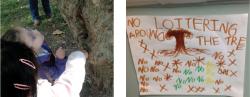
Parents, educators, and other primary caregivers might not realize that a small patch of grass, a single tree, and a walk to the store are opportunities to observe nature, generate questions, and conduct experiments to find answers.
Not every preschool can implement a full nature-based approach. Small shifts in program practices can give children more meaningful experiences with the natural world.
EarlyON Child and Family Centres are free drop-in centers in Ontario, Canada, for children birth to 6 years of age, along with their parents or other caregivers.
NAEYC attended the 6th Annual International Education Exhibition and Forum Taleem 2018 in Riyadh, Saudi Arabia, for this year’s conference theme, “Teaching and Learning in Early Childhood Education.”