إن الممارسة الصارمة وتلك الملائمة من الناحية التنموية، تعتبران ضروريتين للتعليم بمرحلة الطفولة المبكرة؛ وإذا ما تم القيام بهما على نحو سليم، فإن كل منهما سوف يعزز الآخر
NAEYC is for the active embrace of equity. We are for talking openly and honestly about diversity, and we are for changing our policies and practices to enhance our organizational commitment to being high performing and inclusive.
In a recent Hello discussion, a teacher sought advice on how to support a child with two moms around Father’s Day, and how to discuss this with his parents in a way that was respectful to all the families.
The concept of teacher as ethnographer and the four dimensions of teacher cultural capital could serve as key strategies toward improving the social and academic outcomes for children of color.
This article, along with the suggested resources, provides a starting point for teachers and families seeking to do the important work of supporting young children’s learning and understanding about race and racism.
In this article, we argue that creating engaging early math-learning opportunities is critical, especially for African American boys, and we recommend choosing materials and designing environments to optimize early math learning.
In this article, we describe the transformation of 17 kindergarten classrooms from didactic experiences for children to rigorous and developmentally appropriate student-centered learning environments.
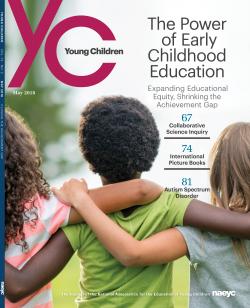
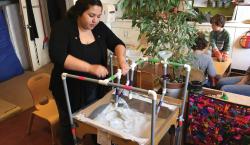
The four authors describe and reflect on a cross-cultural and international exchange of data about inquiry-based teaching and learning between preschool-age children’s science engagement in the West Bank and in San Francisco.
Authored by
Authored by:
Isauro M. Escamilla, Buad Khales, Daniel R. Meier, Martha Melgoza
Using international picture books is a powerful vehicle for teachers who want to foster children’s development of intercultural knowledge and understanding in meaningful ways.
En NAEYC, la educación anti-prejuicio lleva mucho tiempo como el núcleo del trabajo que hacemos relativo a la raza, la justicia social, la equidad y la diversidad.
The four authors describe and reflect on a cross-cultural and international exchange of data about inquiry-based teaching and learning between preschool-age children’s science engagement in the West Bank and in San Francisco.
Authored by
Authored by:
Isauro M. Escamilla, Buad Khales, Daniel R. Meier, Martha Melgoza
The primary focus of this special issue of Young Children is teachers’ decision making and actions within the social and cultural context of developmentally appropriate practice as it pertains to Black children.
This article outlines some of the factors that contribute to the achievement gap between African Americans and White Americans and ends with recommendations for educators, administrators, and policy makers to help equalize educational opportunities.
It is vital for early childhood educators to develop cultural awareness and essential proficiencies to effectively teach across racial and cultural differences.
This blog post was originally published on New America's website on January 23, 2018, and is part of Moving Beyond False Choices for Early Childhood Educators, a series edited by Stacie G. Goffin.
Read the following story and teacher reflections, and use the Reflective Questions on page 12 to deepen your thinking and shape your teaching practices.