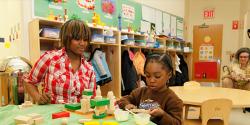
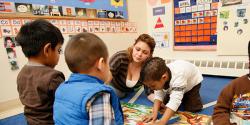
Promoting equity in your classroom is within your reach, and this course will give you some of the tools you need. It focuses on what equity work can look like for teachers working with children ages 3 through 5 on a day-to-day basis in the classroom.
This module provides teachers with classroom examples and practical strategies to enhance their awareness of how cultural practices are deeply embedded in children and families behavior.
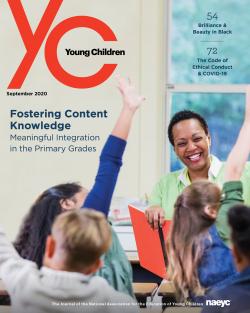
Fostering Content Knowledge: Meaningful Integration in the Primary Grades
The September 2020 issue of Young Children includes a cluster of articles that showcase the power of integrating science, math, technology, literacy, and social studies to make learning meaningful and content-rich across the primary grades.
This Focus on Ethics column discusses some of the ethical issues the pandemic has created for teachers and administrators working in programs that serve young children.
Through inquiry, teachers and young children can create authentic, organic learning that informs their understanding of themselves, of others, and of the world they live in.
During these times of heightened stress due to COVID-19, children and their families want to be seen and to know that they matter. Without this recognition of their humanity and their lived experiences from teachers...
Dr. Brian Wright asks teachers to let families, especially Black and brown families, know that they are seen and their contributions to their children's learning are valued.
When hearing the words suspension and expulsion, most people do not think about children 5 and under. However, young children in state-funded preschool settings are expelled at three times the rate of K–12 students, as private school students.
Authored by
Authored by:
Sarah C. Wymer, Amanda P. Williford, Ann S. Lhospital
NAEYC continues to work towards advancing equity with humility and awareness of our history and limitations, and a recognition that no individual, leader or organization has all the answers.
Children rely on adults to help them figure out what things mean. Children’s curiosity, puzzlement, and anxiety provide rich opportunities for adults to respond to their attempts to understand what they observe happening in their world.
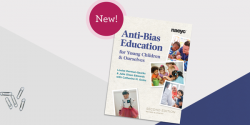
This revised edition provides the latest research-based guidance for supporting children's social identities, including gender, race, culture, abilities and more!
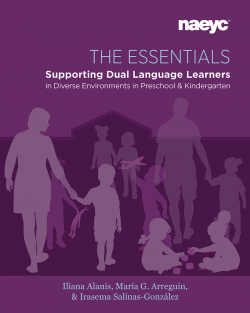
We use the term dual language learner (DLL) to refer to any young child who is learning two or more languages. Many experts believe that growing up bilingual is beneficial for both children who are DLLs and for all children in general
When intentional teachers ask questions to expand children’s thinking and help them explore related vocabulary and concepts, children’s learning is enriched and their curiosity grows, fueling yet more inquiries.
When intentional teachers ask questions to expand children’s thinking and help them explore related vocabulary and concepts, children’s learning is enriched and their curiosity grows, fueling yet more inquiries.