Reflecting NAEYC’s commitment to periodically revising and updating its core position statements, we’ve worked hard to reflect the knowledge from research and practice that has emerged over the last decade since DAP was last revised.
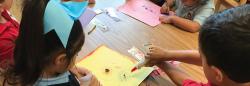
In this article, we aim to support teachers by sharing our experiences creating, managing, and sustaining developmentally appropriate opportunities for meaningful talk in prekindergarten classrooms with multilingual learners.
Authored by
Authored by:
Mary E. Bolt, Carmen M. Rodriguez, Christopher J. Wagner, C. Patrick Proctor
In this article, I offer five strategies that take into account the unique aspects of learning an additional language and capitalize on the social and interactive nature of early childhood classrooms.
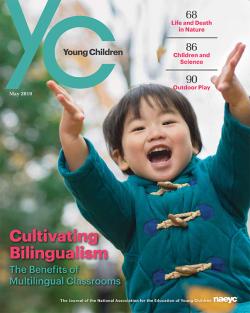
This issue of Young Children takes you inside several multilingual classrooms for in-depth, practical examples of how to enhance social, emotional, scientific, language, and literacy development with children who are learning more than one language.
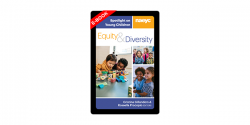
The newest book in the Spotlight on Young Children series is influenced by NAEYC’s upcoming position statement on advancing equity in early childhood education.
The following tips can help you consider your assumptions, expectations, and biases so that you can better develop your own empathy and the children’s as well.
We are excited to share a summary of the event held in July 2018, “Leading and Working Toward Equity: Leadership Summit”, which includes attendee reflections and actions from after the event. Read the report and learn more about our Equity initiative!
Creating equitable learning opportunities for young children is at the core of NAEYC’s mission. Learn about recent NAEYC initiatives, including the draft Position Statement on Advancing Equity and the summary of the Leading & Working toward Equity Summit.
A teacher conducted a pilot study to better understand how the children in her classroom were acquiring multiple languages and how to most effectively support them in the process.