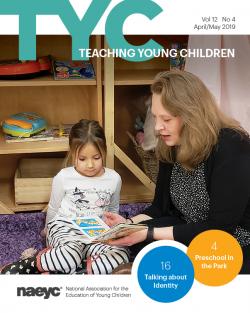
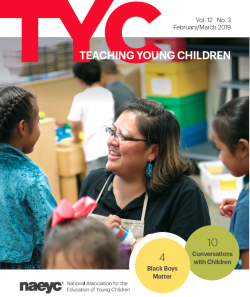
Three years ago, the Child Care Center at Hort Woods made a formal commitment to teaching anti-bias education. Center leaders and teachers recognized that an anti-bias program was one way of helping the 170 children and families who attend the center.
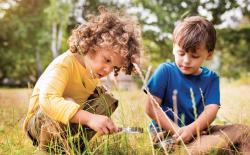
If the environment is the third teacher, there is no better classroom environment than the outdoors. I use our experiences and my notes and pictures as inspiration for our curriculum.
Schools like Tiny Trees that offer place-based education rely on the surrounding landscape to teach life skills, such as staying warm and contributing to the community.
The SEEDS approach to repeated read alouds offers teachers a structured, emotionally supportive, and intentional way to increase children’s language and literacy development.
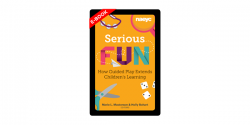
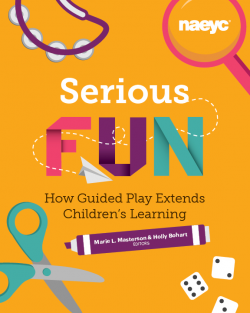
Guided play is a powerful tool educators can use to help preschoolers and kindergartners learn essential knowledge and skills in the context of playful situations.
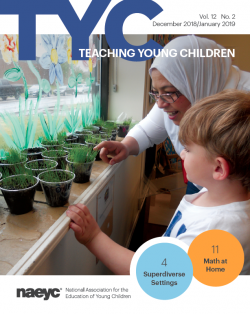
This article will help early childhood educators embed in their instructional plans outdoor learning opportunities that support the whole child. The accompanying examples are based on the authors’ experiences earlier in their careers.
Last month, NAEYC continued with the second iteration of our successful online book club, as members were invited to read Big Questions for Young Minds: Extending Children’s Thinking, by Janis Strasser and Lisa Mufson Bresson.
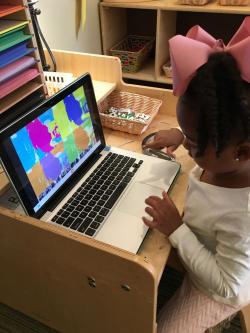
When teachers integrate high-quality, educational media as part of their teaching, children are likely to be engaged and motivated and on their way to developing important knowledge about the world!
When teachers integrate high-quality, educational media as part of their teaching, children are likely to be engaged and motivated and on their way to developing important knowledge about the world!