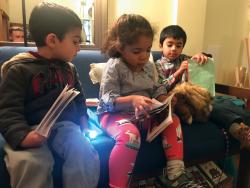
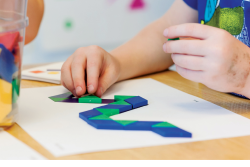
This is the second article in Preschool Play Plans, a TYC series. These are ideas for open-ended indoor and outdoor activities that use inexpensive or free materials—bubbles, mud, chalk, playdough, and cardboard boxes.
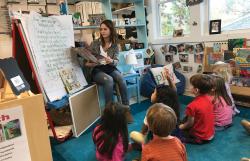
This is the first article in a series about asking questions that foster rich conversations. Visiting a variety of preschool settings, we’ll consider the different types of questions teachers ask and listen to children’s responses.
Your preschooler is learning positive behaviors just like she’s learning new words and skills. It’s important to stay calm, patient, and consistent as you help your child understand your expectations.
When faced with challenging behavior, it’s important to focus on teaching new skills and reinforcing desired behaviors. When challenging behavior is replaced with appropriate skills, positive change is sure to follow!
Este mensaje es para recortarse, fotocopiarse y enviarse a casa con los niños como recurso para los padres. Está disponible también por internet en NAEYC.org/tyc.
It is vital for early childhood educators to develop cultural awareness and essential proficiencies to effectively teach across racial and cultural differences.
The concept of teacher as ethnographer and the four dimensions of teacher cultural capital could serve as key strategies toward improving the social and academic outcomes for children of color.
This article, along with the suggested resources, provides a starting point for teachers and families seeking to do the important work of supporting young children’s learning and understanding about race and racism.
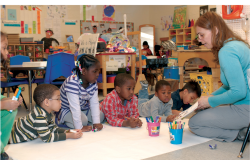
In this article, we argue that creating engaging early math-learning opportunities is critical, especially for African American boys, and we recommend choosing materials and designing environments to optimize early math learning.
In this article, we describe the transformation of 17 kindergarten classrooms from didactic experiences for children to rigorous and developmentally appropriate student-centered learning environments.
NAEYC promotes high-quality early learning for all children, birth through age 8, by connecting practice, policy, and research. We advance a diverse early childhood profession and support all who care for, educate, and work on behalf of young children.