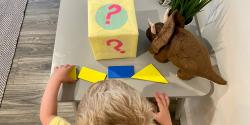
Enhanced by math activities, higher-order mental skills and abilities serve as the behind-the-scenes machinery that facilitates young children’s ability to engage in and demonstrate their learning competency.
Authored by
Authored by:
Holland W. Banse, Douglas H. Clements, Julie Sarama, Crystal Day-Hess, Marisa Simoni, Candace Joswick
It is important that educators and researchers pay attention to immigrant children’s experiences and honor and actively incorporate their transnational expertise into early learning settings.
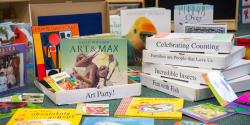
This article outlines the "Literacy-to-Go program and the ways in which communities can partner with families, teachers, and other professionals to support the literacy development of young learners.
Authored by
Authored by:
Maryia LaBree, V. Susan Bennett-Armistead, Cynthia Crosser
This article asks the question, "How can early childhood teachers create listening centers that are community responsive and that foster early literacy development?"
In our ongoing work, we have identified four factors that influence the degree to which teachers are able to fuel science inquiry with multilingual learners while simultaneously promoting equitable and inclusive classroom science environments.
Authored by
Authored by:
Cindy Hoisington, Jessica Mercer Young, Jeff Winokur
Early childhood educators know how challenging transitions can be! NAEYC has collected a list of resources to support your unique ECE needs. Whether going back to school or looking for strategies in the classroom, NAEYC is here to help.
NAEYC promotes high-quality early learning for all children, birth through age 8, by connecting practice, policy, and research. We advance a diverse early childhood profession and support all who care for, educate, and work on behalf of young children.
NAEYC promotes high-quality early learning for all children, birth through age 8, by connecting practice, policy, and research. We advance a diverse early childhood profession and support all who care for, educate, and work on behalf of young children.
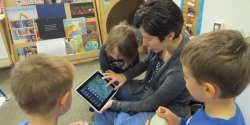
Tablets, apps, and other digital technology can help children learn—as long as you carefully plan the content, and monitor how children use them. Read on for ideas for using apps and other digital technology in your classroom!
Authored by
Authored by:
Jennifer Garrette Lisy, Kathleen A. Paciga, Mary Quest
Place-based education uses local cultures, heritage, landscapes, opportunities, and experiences to create a curriculum in which literacy, mathematics, social studies, science, and arts learning occur in the context of place.
It’s not uncommon to have children in your program who spend time with parents in two different homes. Individualizing communication is an effective way to recognize and welcome diverse family structures.
Whether you’re a seasoned teacher or this will be your first year, these reminders will help you plan the many steps of family conferences—from preconference scheduling to follow-up.
Through music and language, movement, and the visual arts, rap and other elements of hip-hop culture can support preschoolers’ learning and development in all domains.
Using guidance instead of discipline means helping young children understand they can learn from their mistakes, and it starts with showing them how to do so.
Empowering Educators & Programs: A Blueprint for Excellence
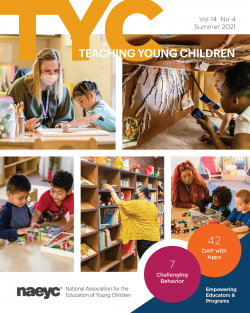
Teaching Young Children is NAEYC's magazine for anyone who works with preschoolers. Colorful, informative, and easy-to-read, TYC is packed full of teaching ideas, strategies, and tips.